RFID vs. Magnetic Locks: Which is Best for Secret Compartment Furniture?
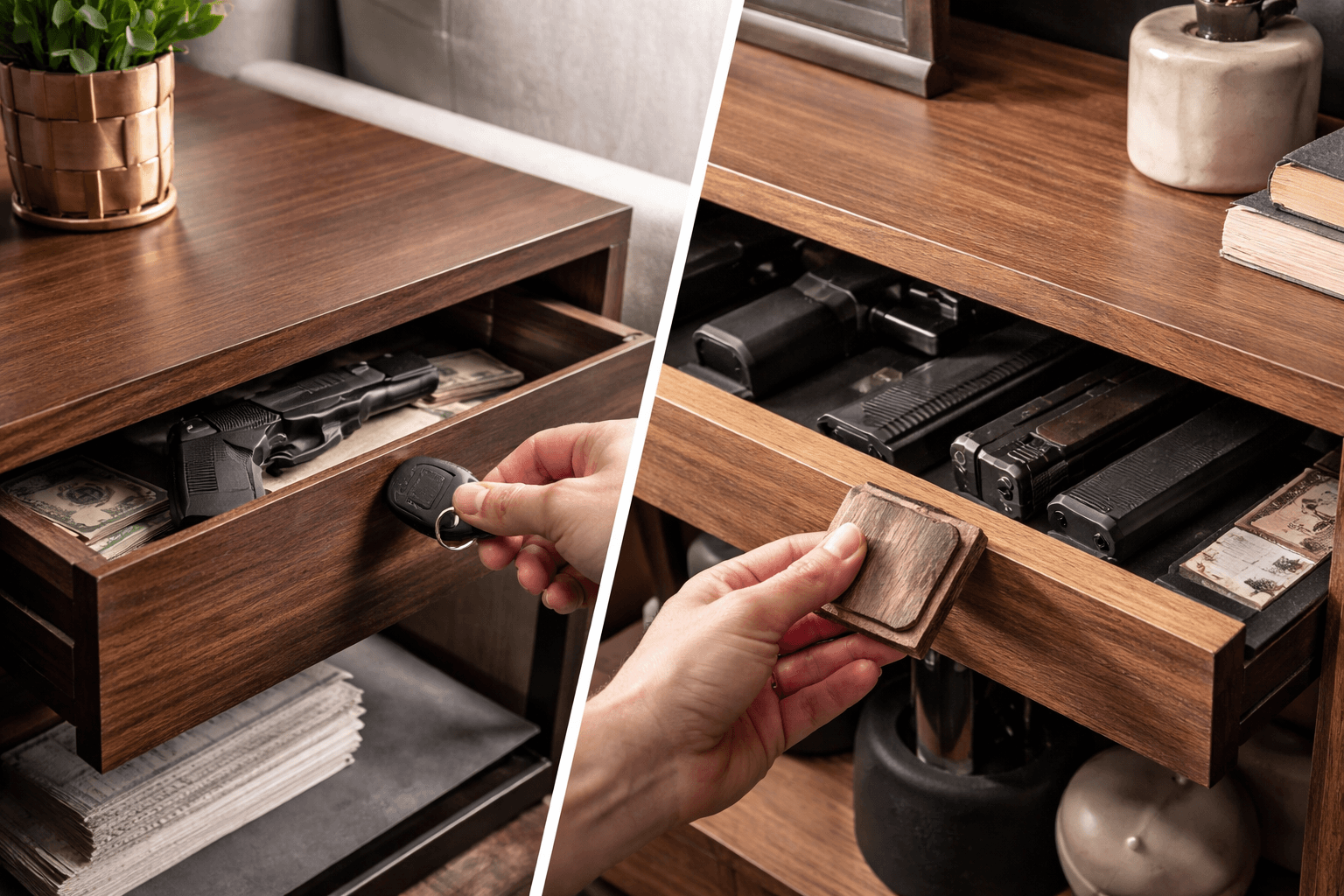
A secret compartment is only as good as its lock. If the lock is slow, awkward, or unreliable, the “hidden” feature becomes a gimmick. If the lock is too obvious, it stops being a secret. This guide breaks down the two most common options—magnetic locks and RFID locks— so you can confidently decide whether the upgrade is worth it.
The quick answer
- Choose RFID if you want fast, one-touch access and the most “invisible” user experience.
- Choose magnetic if you want maximum reliability with zero batteries and lower cost.
- In family homes, both are typically better than friction or push-to-open compartments that can be found by accident.
What “best” actually means for hidden compartments
People usually shop secret compartment furniture for the same reasons: discreet storage, peace of mind, and a cleaner-looking room. But the lock determines whether you’ll actually use the compartment the way you imagined.
When comparing locking mechanisms, focus on four things:
- Speed: Can you open it quickly when you need to?
- Consistency: Does it work the same way every time, even when you’re stressed or tired?
- Stealth: Is the entry method invisible, or is it easy to guess by touch and trial?
- Key control: Can you keep the “key” out of sight and accessible only to the right people?
Keep those in mind as we break down magnetic and RFID systems.
Magnetic locks: the reliable classic
How magnetic locks work
Magnetic locks use a separate magnetic “key” to release a hidden latch inside the furniture. The key might look like a coaster, a small wooden block, or another decorative object. You place it on a specific spot, and the internal mechanism pops open or releases a panel.
The big appeal is that nothing about the outside of the furniture screams “there’s a compartment here.” No keyhole. No keypad. No obvious button. It’s a simple mechanical system triggered by a magnet.
Pros
- No batteries: nothing to charge, replace, or maintain.
- Very reliable: fewer parts that can fail compared to electronic locks.
- Lower cost: usually the more affordable option.
- Quiet and discreet: no lights, beeps, or electronic signals.
Cons
- You must manage the key: if you forget where it is, access becomes annoying.
- Slower under pressure: you need the key and you need to place it correctly.
- Household risk: if the key is left out or looks “special,” it can attract curiosity.
Best use cases
Magnetic locks are ideal when you want dependable hidden storage for items you don’t need instantly. Think passports, jewelry, important documents, heirlooms, emergency cash, spare keys, or anything you want out of sight without adding electronics to your life.
If your goal is long-term storage and maximum reliability, magnetic locks are often the best value for money.
RFID locks: the high-tech guard
How RFID locks work
RFID locks hide an electronic sensor inside the furniture. When the sensor detects an authorized RFID token (usually a key fob, card, or sticker), it triggers the latch and unlocks the compartment. From the outside, the furniture often looks completely normal—no keyhole, no visible mechanism.
The experience is simple: bring the token near the right area, and it opens. For many buyers, it’s the fastest and cleanest-feeling option.
Pros
- Fast access: typically a quick tap or touch rather than a “find-and-align” process.
- Very discreet: often the most invisible external appearance.
- Convenient for daily use: especially if the compartment is opened frequently.
- Multiple tokens: can be set up for trusted adults, depending on the system.
Cons (and what to check before buying)
- It uses batteries: you need a basic maintenance habit to replace them periodically.
- Low-battery behavior matters: quality RFID systems usually provide a warning and a clear backup method. Before you buy, make sure you understand what happens when the battery is low and how you would access the compartment if power runs out.
- More complexity: cheaper systems can be less consistent than a simple mechanical latch.
Best use cases
RFID locks are best for people who care about speed, sleekness, and a premium “smart” feel. If you want the compartment to open quickly without needing to locate a special-looking key, RFID is usually the upgrade.
RFID can also be a better match when you want the access method to be nearly impossible to guess from the outside, because there’s typically no visible clue of where the mechanism is.
Head-to-head comparison
Speed
- RFID: usually faster—tap and open.
- Magnetic: can be fast, but only if the key is exactly where you expect it to be.
Reliability
- Magnetic: tends to win—simple mechanism, no power requirements.
- RFID: reliable when well-built, but it depends on battery health and system quality.
Stealth
- RFID: often the most invisible experience—no keyhole, no obvious “tell.”
- Magnetic: also very stealthy, but the key itself can become a giveaway if it’s found.
Everyday practicality
- RFID: best for frequent use and quick access.
- Magnetic: best for occasional use and long-term storage.
The money section: what you should pick (and why)
For home defense
If your priority is fast access when seconds matter, RFID is usually the better choice. The tap-to-open flow is simpler than locating a magnetic key and aligning it correctly—especially under stress.
If you go RFID for this reason, don’t treat batteries as an afterthought. Choose a system that clearly explains low-battery warnings and backup access, and build a simple habit of replacing batteries on a schedule.
For long-term storage
If you mainly want reliable hidden storage for valuables, magnetic is the safer bet. No batteries. No electronics. Fewer things that can fail. It’s the option most people end up appreciating months later when it “just works” every time.
For kids and family homes
In homes with kids or frequent guests, the biggest risk isn’t usually a sophisticated intruder—it’s discovery by curiosity. Friction or push-to-open compartments can be found by accident because they respond to random pulling and pushing. Magnetic and RFID locks reduce that risk because they require a specific key or token.
That said, both systems still depend on key control:
- Don’t leave a magnetic key sitting on a coffee table where it looks like “the special coaster.”
- Don’t keep an RFID fob hanging on a hook labeled “spare keys.”
- Store access tools where only trusted adults can reach them.
Buyer checklist
Before you pay extra for the upgrade, use this checklist to avoid regret:
- How fast do you truly need access? Daily use and “grab quickly” scenarios lean RFID. Occasional access leans magnetic.
- Are you disciplined with maintenance? If battery routines aren’t your thing, magnetic will make you happier.
- Where will the key/token live? A lock is only as good as your ability to control access to it.
- What’s the low-battery plan (RFID)? Know the warning signs and the backup access method.
- How stealthy is the furniture itself? A great lock can’t fix a compartment that’s obvious by design.
FAQs
Is RFID “more secure” than magnetic?
Not automatically. RFID is often better for speed and keeping the access method invisible. Magnetic is often better for pure mechanical reliability. “Best” depends on your goal: quick access, long-term storage, or minimizing accidental discovery in a busy home.
What happens if an RFID lock runs out of power?
It depends on the system. Better RFID locks provide low-battery warnings and a clear backup access method. The important part is confirming how the product behaves at low battery and what the override process is.
Are magnetic locks hard to open?
They’re easy when the key is accessible and you know the sweet spot. The friction point is usually not the mechanism itself— it’s remembering where the key is when you need it.
Final takeaway
If you want fast, seamless access and a premium “invisible lock” feel, go RFID and commit to basic battery maintenance. If you want maximum reliability, minimal fuss, and strong value for money, go magnetic. Either way, the best lock is the one you can use consistently while keeping the key or token controlled and out of sight.
Affiliate Disclosure: This post may contain affiliate links. HiddenCompartmentFurniture.co.uk participates in affiliate programs and may earn a commission when you click links and make a purchase. This comes at no additional cost to you. Learn more.